Issue No. 308

ALISON LANGLEY
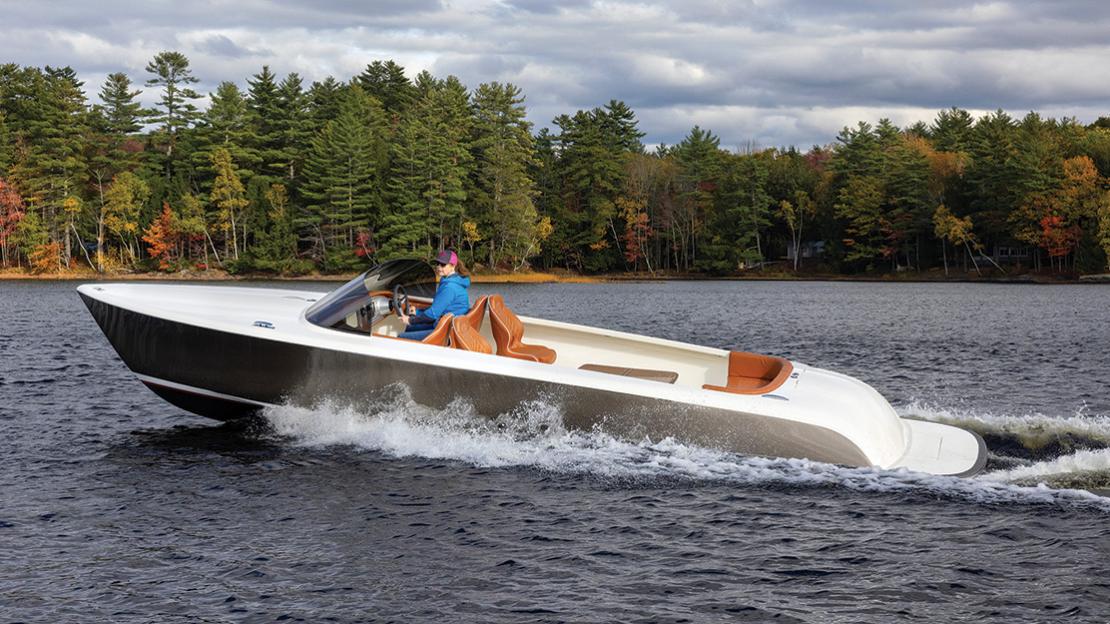
ISOBEL, a 26′ runabout from Stephens Waring Design of Belfast, Maine, was conceived as a commuter boat serving an island property on a Maine lake. A tight set of parameters—a short commute, readily available charging on both ends of the commute, and occasional watersports outings of an hour or so—made the boat a ready candidate for clean, quiet electric propulsion.
Every now and then, the stars align and every element falls into place for a very special project. In the spring of 2021, during the depths of the Covid-19 pandemic, a good friend telephoned me for some boat advice. Mary Jane was considering purchasing a lakefront property, and she asked me to advise her about an appropriate small motorboat to serve as a tender to the property. She had a trial run scheduled with a local dealer for a small production outboard launch and wondered if I would like to take a ride.
It was early May, which in coastal Maine is very early boating season. The temperature was chilly, but the sun was bright, the air was crisp and breezy, and I hadn’t been afloat yet that year. Why not go for a ride?
We met on the shore of Lake Megunticook in Camden, Maine, where the dealer had the boat ready to launch. It was a brand-new, traditional 21' offering—something that would have been familiar to anyone who grew up on a lake in the U.S. or Canada in the mid- to late-20th century. More attractive utility launch than runabout, it featured a boxy metal-framed windshield over a short foredeck, bench helm seats aft of the dashboard, aft-facing seats amidships, and a bench seat across the after end of the cockpit. All surfaces in the cockpit were carefully wrapped in marine-grade white vinyl. In a splash-well aft, a 150-hp two-stroke gasoline-powered outboard motor loomed over the quarterdecks.
The motor rumbled to life, and we cast off from the dock and explored the beautiful lake for an hour or so putting the boat through its paces. Mary Jane had experience with large saltwater sailboats, but the small powerboat world was a mystery to her, so this experience was quite enlightening. The boat was a good performer, coming up on plane easily and running at speed smoothly and steadily. It also exhibited the typical vices of outboard boats: difficult close-quarters maneuvering, engine noise from the tall cowling, and the outboard motor’s visual interruption of the boat’s lines—and the sight lines from the boat. The most noticeable vice came when we tried backing into a stiff breeze; the exhaust gases welled up from the water’s surface and blew back through the cockpit, carrying the distinctive gas-and-oil smell of a two-stoke motor.
Click the button below to log into your Digital Issue Access account.
No digital access? Subscribe or upgrade to a WoodenBoat Digital Subscription and finish reading this article as well as every article we have published for the past 50-years.
To read articles from previous issues, you can purchase the issue at The WoodenBoat Store link below.
 Purchase this issue from
WoodenBoat Store
Purchase this issue from
WoodenBoat Store

1952 Old Town OTCA sailing canoe17'. Mahogany trim, Gunwales and thwarts.
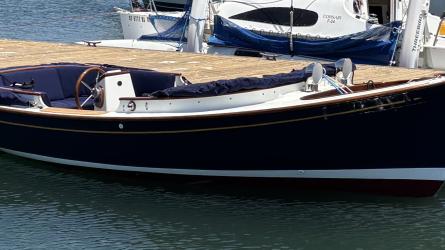
A blend of traditional New England and European launches with full displacement hull combined wit
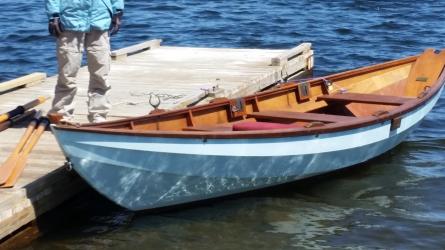
Fiberglass bottom, trailer. Built in 2005 by Old Wharf Dory Company in Wellfleet, MA.